|
-
18th March 09, 10:32 AM
#1
Cavers, home of the Balliols and later of the Black Douglases
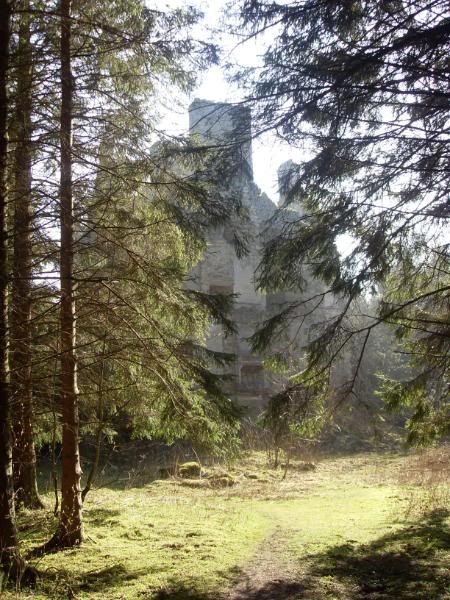
Hidden away in a small clearing amid a large pine plantation can be found the ruins of Cavers House. A castle was originally constructed on this site by the Balliols around 1200 and inhabited by them for the next two hundred years. The Douglases played a significant role in the banishing of the Bailliols from Scotland and Cavers Castle passed to the Black Douglas lineage. Sir Archibald Douglas, 3rd Earl of Douglas constructed a new tower house on the site of Bailliol's castle after he succeeded to the earldom when James Douglas fell at the Battle of Otterburn in 1388. James Douglas' banner, and the captured pennon of Henry Percy (Hotspur) were preserved here until Victorian times.
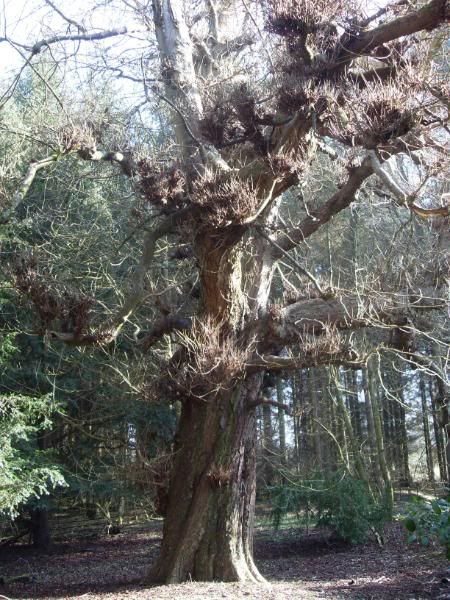
Two horse chestnut trees were planted by the Douglases at the entrance to the tower in 1604 and one of them is still alive today.
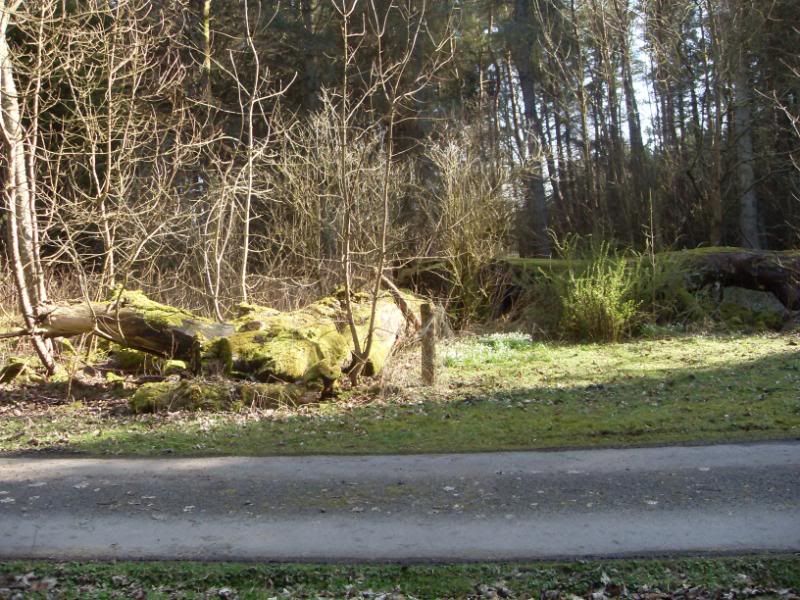
A travelling witch and her daughter sought refuge in the tower but were discovered during the night and turned out by the Douglases. As they left the witch put a curse on the tree that every time a branch would touch the ground a Douglas would die. The curse only ended when the tree was felled in the twentieth century. Here are two sections of the trunk, and the bole can just be spotted between them.
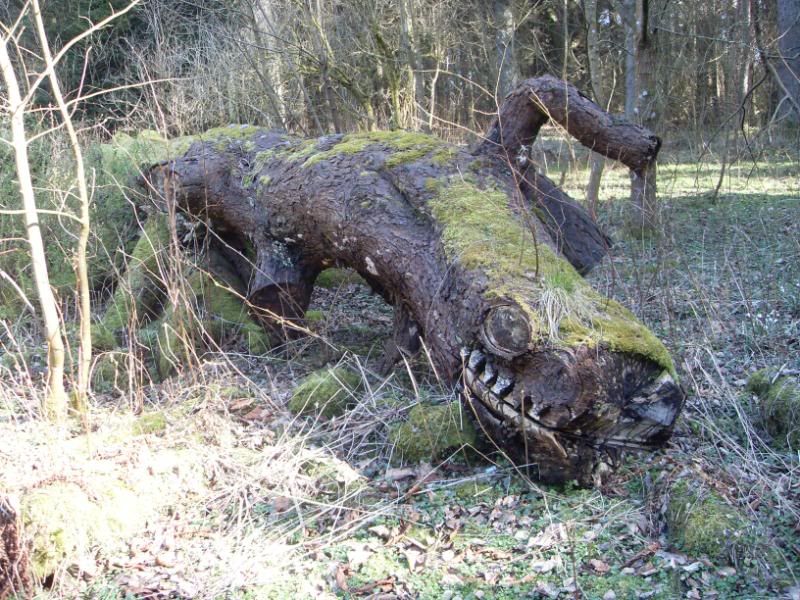
Perchance I may have a vivid imagination, but I saw this section of the cursed tree as resembling a crocodile.
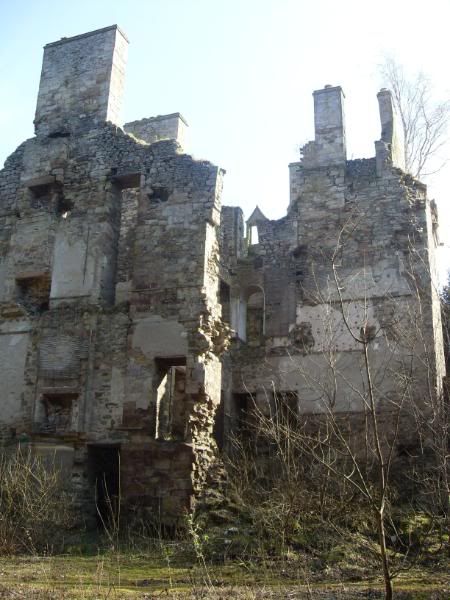
Anyway, lets get on with exploring the house. First impressions are uninspiring as we initially see the 19th century extension. Cavers Tower was occupied by descendents of Sir Archibald Douglas, 3rd earl, until the 20th descendent James Douglas esq. of Cavers died in 1878 leaving the male line extinct. The property passed to his niece Mary Malcolm who married Captain Edward Palmer in 1879 and the Palmer-Douglases then extensively re-modelled the property as Cavers House between 1881 and 1887. Later the house fell in to disuse and the Palmer-Douglases made it available to the army, to be used for an exercise in demolition by explosives, and the house was detonated by the army in 1953. More to follow shortly.
Last edited by cessna152towser; 18th March 09 at 01:46 PM.
Regional Director for Scotland for Clan Cunningham International, and a Scottish Armiger.
-
-
18th March 09, 10:41 AM
#2
Nice photos and an interesting history. Look forward to hearing (and seeing) more.
[I][B]Nearly all men can stand adversity. If you really want to test a man’s character,
Give him power.[/B][/I] - [I]Abraham Lincoln[/I]
-
-
18th March 09, 10:48 AM
#3
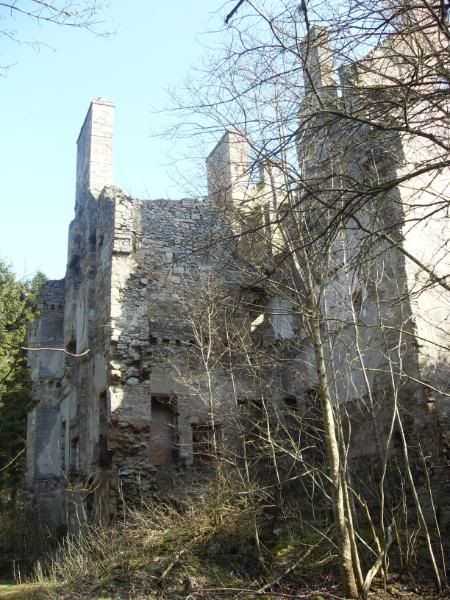
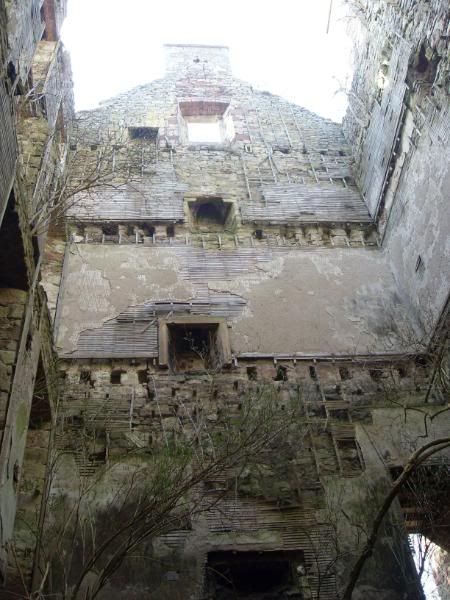
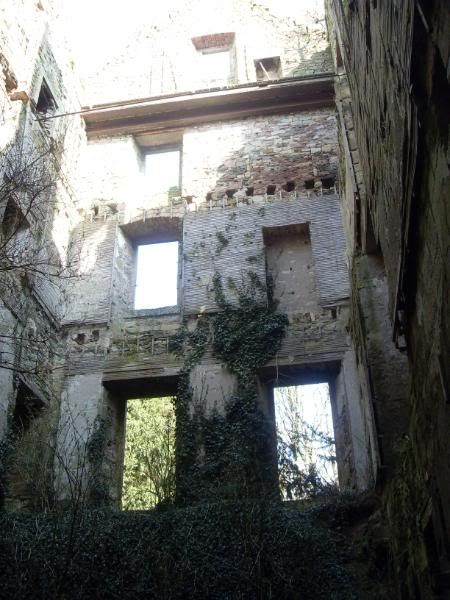
To continue the tale, the army's explosives brought down about half of the Victorian structure but made little impression on the mediaeval part of the house.
Through my Scottish Country Dance class I met the current owner of the ruins who took me to see the property today.
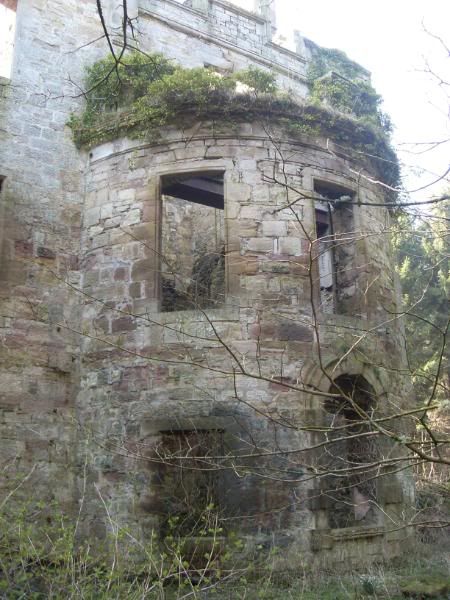
The Victorian alterations included this semi-circular extension at the east end of the building.
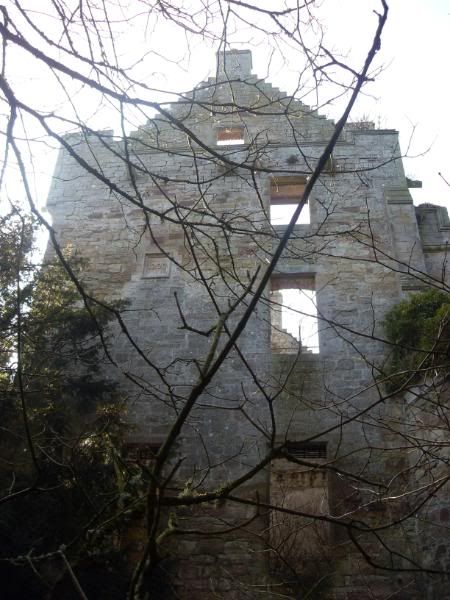
To the left of the above view, the older, or southmost, section of the east wall, showing the tower, into which large window apertures were cut during the nineteenth century alterations.
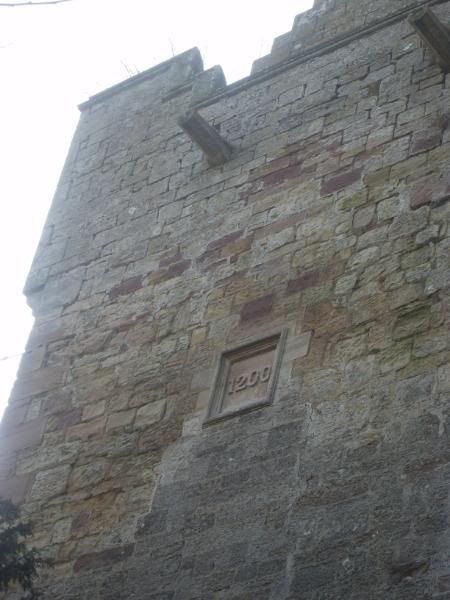
Yes, the date stone on the tower does say 1200, but this was made by a nineteenth century stone mason. The tower into which it has been set was probably constructed at least two hundred years later, on the site of the original castle which dated from around 1200.
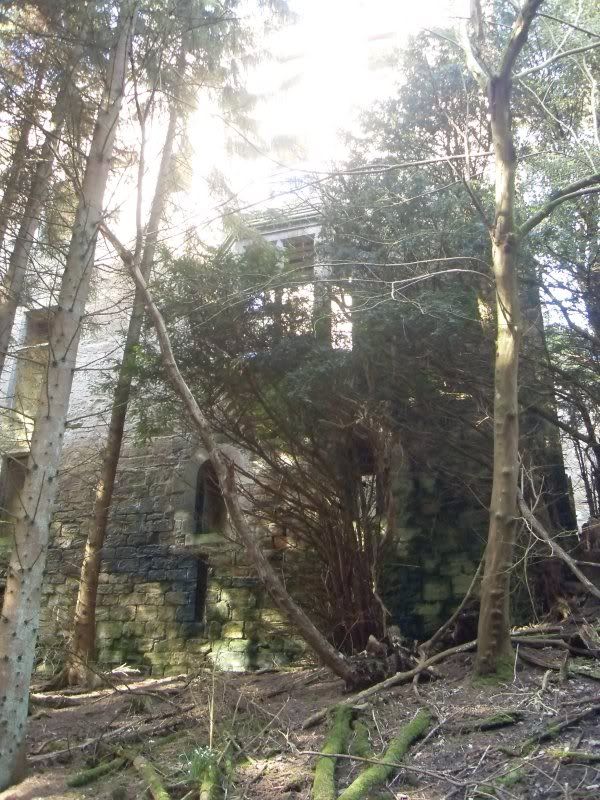
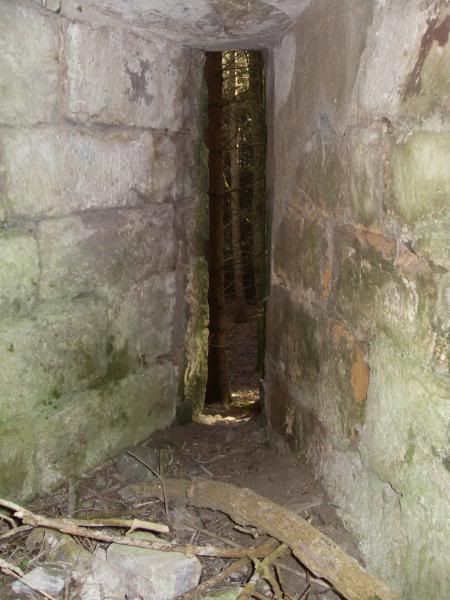
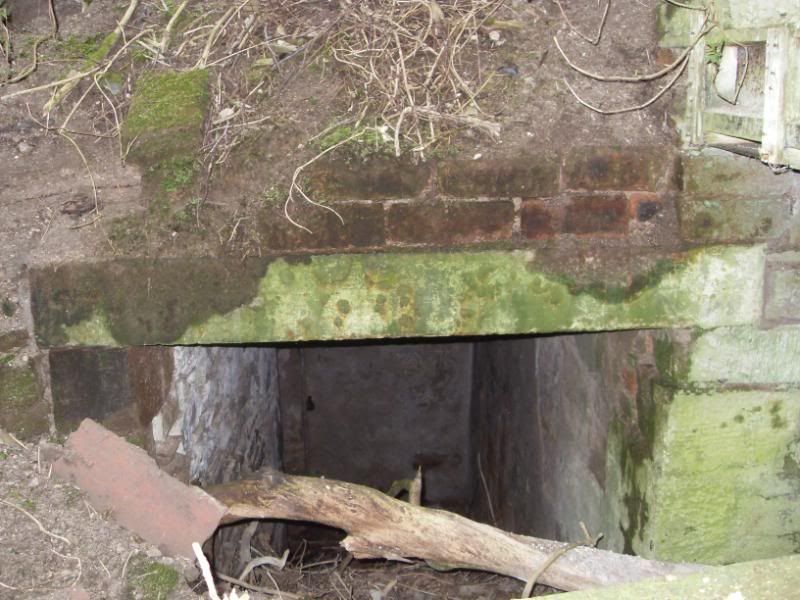
It was difficult to get a photo of the south wall because of all the trees. Note the Victorian bay window towards the right, and the mediaeval arrow slit towards bottom left. More about the arrow slit later.
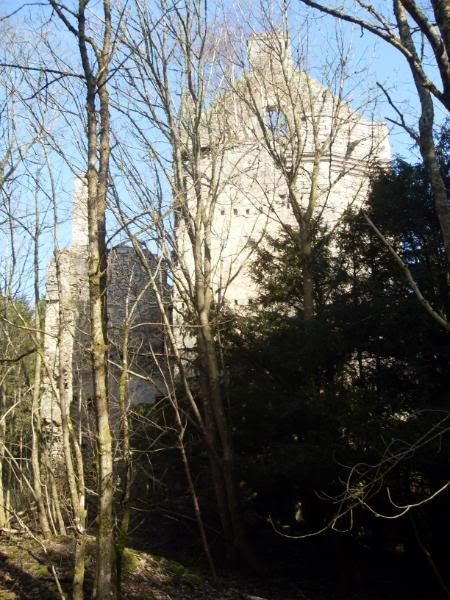
The west wall
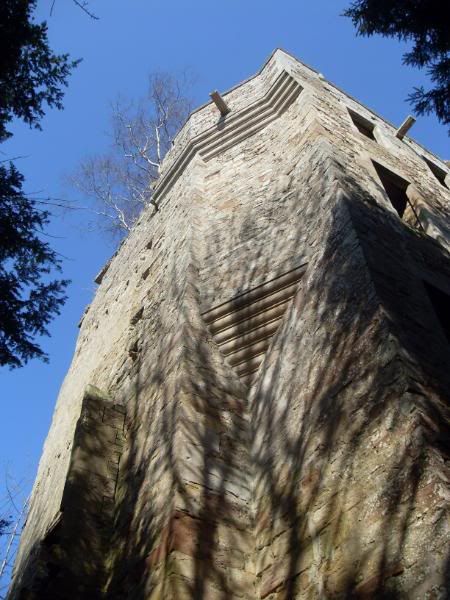
Looking up the west wall.
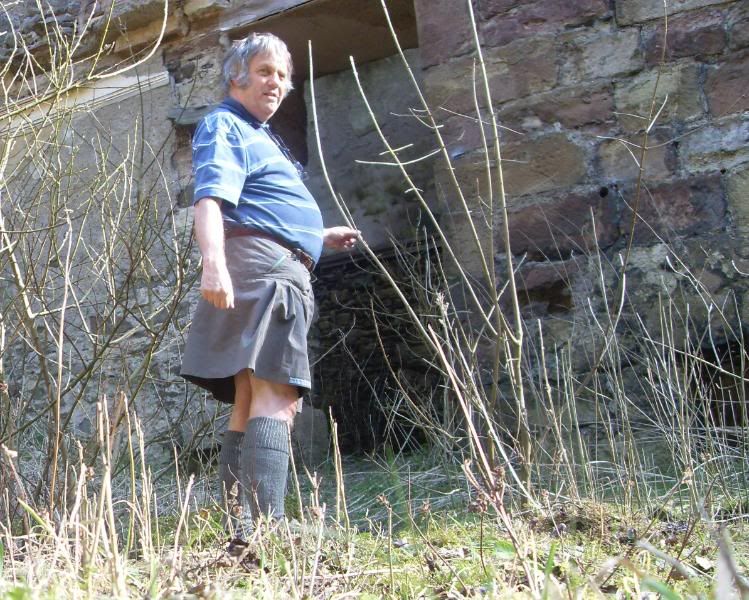
So let's explore inside!
Last edited by cessna152towser; 18th March 09 at 10:54 AM.
Regional Director for Scotland for Clan Cunningham International, and a Scottish Armiger.
-
-
18th March 09, 10:59 AM
#4
Absolutely riveting! I enjoyed that and agree that the felled trunk does look like a gator, or a croc.
-
-
18th March 09, 11:05 AM
#5
-
-
18th March 09, 11:15 AM
#6
-
-
18th March 09, 11:23 AM
#7
Incredible! I wish I had something like this to share. Here in the Pacific Northwest of the US everything was made of wood. Most of the historical building have rotted due to the wet conditions. Someday I hope to make it to Scotland to see places like this first hand. Thanks for sharing the photos and the information. I am a glutton for history.
James
James Gorley
Highland Thrower
-
-
18th March 09, 11:27 AM
#8
Amazing! Thanks so much for sharing these  The lighting gave the photos such a dreamlike quality -- loved them! The lighting gave the photos such a dreamlike quality -- loved them!
-
-
18th March 09, 12:14 PM
#9
WOW!! You made my DAY. GREAT TOUR & More INFO
As you fnow, I have a Direct Line with the BLAC DOUGLASSES. ( in 1622 my "branch" came to N. Amer.)
I Have 2 ???
1. The LOCATION of the "Castle" ???
2. Any idea of who was in possession of the LAND ( Estate) in 1600-1620s ???
Puffer
-
-
18th March 09, 12:18 PM
#10
Very interesting. Thanks for sharing!!
-
Similar Threads
-
By Good Egg in forum How to Accessorize your Kilt
Replies: 57
Last Post: 9th January 09, 09:19 AM
-
By BonnieT100 in forum General Kilt Talk
Replies: 7
Last Post: 16th July 08, 04:19 PM
-
By kiltedinUSMC in forum General Kilt Talk
Replies: 10
Last Post: 9th June 08, 07:16 PM
-
By michael wilson in forum Kilt Advice
Replies: 52
Last Post: 20th January 08, 02:37 PM
-
By Nick in forum Miscellaneous Forum
Replies: 8
Last Post: 17th September 07, 09:20 PM
Tags for this Thread
 Posting Permissions
- You may not post new threads
- You may not post replies
- You may not post attachments
- You may not edit your posts
-
Forum Rules
|
|





 Originally Posted by cessna152towser




Bookmarks