Quote Originally Posted by OC Richard View Post
I rather like the new tartan from an aesthetic standpoint. Looking forward to seeing a kilt made up in it.


It's tough to take something else, such as a flag, and turn it into pleasing woven fabric. Combining two flags is harder yet, but somehow it all works for me.

My only quibble is that of 'scale', the very fine lines which give those portions an un-tartan-like look. One sees it in fashion plaid fabric all the time, fine lines giving the illusion of the edges being blurred, like this
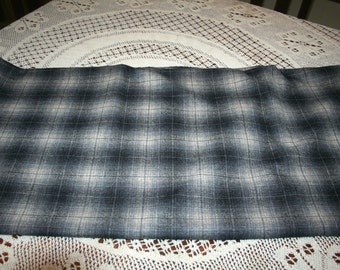


Traditional tartans always seem to have a certain consistency of scale.

It does take the symbolism thing (which was originally not a part of tartan design) to new absurd heights. Even the number of threads have symbolism? What if it's woven in a bigger or smaller sett? And "mythical unicorn"? Oh dear.

Yes I see that Nova Scotia uses the same elements, yet the two tartans look quite different to me.

Oddly, just today I was looking at various renderings of the Nova Scotia tartan and noticing that in some the red line is very fine, so that from a distance the tartan looks mostly blue & gold, but on others the red line is thick making the tartan look blue & orange.

BTW I notice on the two examples of Nova Scotia shown above one has the red line centered, the other offcenter.
Good eye on the off centre red. I'll have to look at my woven stuff at home to see which is more common. I just grabbed those examples from the internet.

Obviously the addition of the green in Nova Scotia is one thing that makes it rather different.

I actually quite like the look of the tartan and that there's a history lesson baked in. I'm inclined to agree with David that the world doesn't "need" another universal tartan but I like that people continue to make tartans for various and sundry causes.

I also like the use of symbolism of colour choice in regional tartans in particular (although I admit the thread count pushes it due to inevitable sett variations). The reason I think it's important to draw on symbolism like this is that you have to justify the tartan as a symbol of the people or place you're naming it after. Using elements characteristic of the people, existing totems or topography of a place is a great way for the people to take ownership of and endorse a tartan design. I cite the Cape Breton tartan as a case in point. Historically, tying colours to a clan tartan wasn't necessary for its adoption when Wilson's of Bannockburn and the Hay Sobiesky Stuart brothers were assigning clans to tartans because they were pushing the mythology of an established history to back it up. Obviously, this point doesn't address tartans lifted from found cloth or famous portraits.