The bottom line with the number of yards in a kilt is that the two overlapping front aprons remain the same regardless, and as the yards go up the additional yards are all in back, so that the kilt gets more and more back-heavy. The cutting out of the pleats helps offset this to some degree.
There's a modern notion that "proper" kilts must have 8 yards.
For years I've been collecting vintage Highland Dress catalogues from Scottish kilt shops and they tell a different tale: throughout the 1920s up into the 1970s identical-quality gents' kilts are offered in 6, 7, and 8 yards. This of course is prior to the concept of "casual" kilts.
And in the early 19th century it was less than that, for example the 93rd Foot in 1801
Officers: 5 yards
Grenadiers: 3.75 yards
all others: 3.5 yards
From 1850 the yardage gradually increased to 6 yards, and reaching 7 yards by 1894.
So a 5 yard kilt, far from being skimpy, in 1801 was a luxurious Officers' kilt.
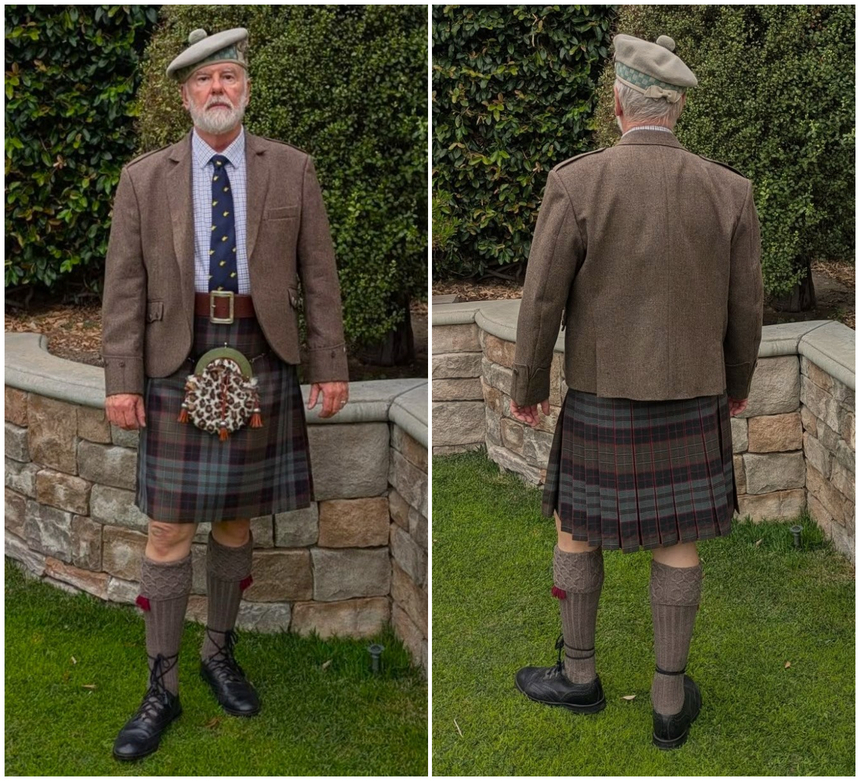
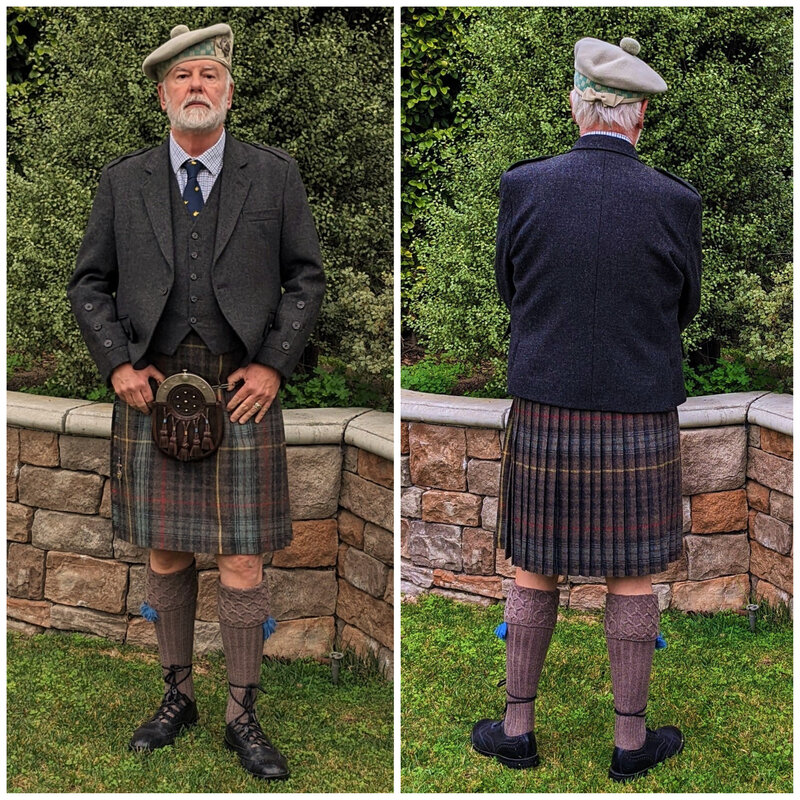
For me the ideal kilt is around 6 yards. There's plenty of pleats to swing and the kilt isn't too heavy in back.
My 6-yard 10 ounce boxpleated kilt
My 6-hard knifepleated kilt
Last edited by OC Richard; 13th March 26 at 03:56 PM.
Proud Mountaineer from the Highlands of West Virginia; son of the Revolution and Civil War; first Europeans on the Guyandotte





Originally Posted by jsrnephdoc


 Reply With Quote


Bookmarks