|
-
26th May 26, 10:19 AM
#21
 Originally Posted by kilted2000

My mother went to Catholic school in the 50s and 60s and was left handed. Past tense because they made her write with her right hand. Good times.
When I was a baby in a high chair, my devoutly Catholic aunt would take my baby spoon out of my left hand and put it in my right hand. I don't think she was crazy enough to think I was possesed but it drove my mom crazy. They used to fight about it until my dad finally stepped in and told my aunt to chill out. Turns out I was not possessed, but to this day I eat and write left handed and do almost everything else right handed.
-
-
27th May 26, 01:00 AM
#22
Originally Posted by The Tartan Sparky
Just bought a new dirk. I’ve seen it depicted as going on the right hip, but also more centered on the body. Which is more correct for a Highlander of the 16-18th century to carry it?
There are various 16th to 18th century records of observations that are often quoted.
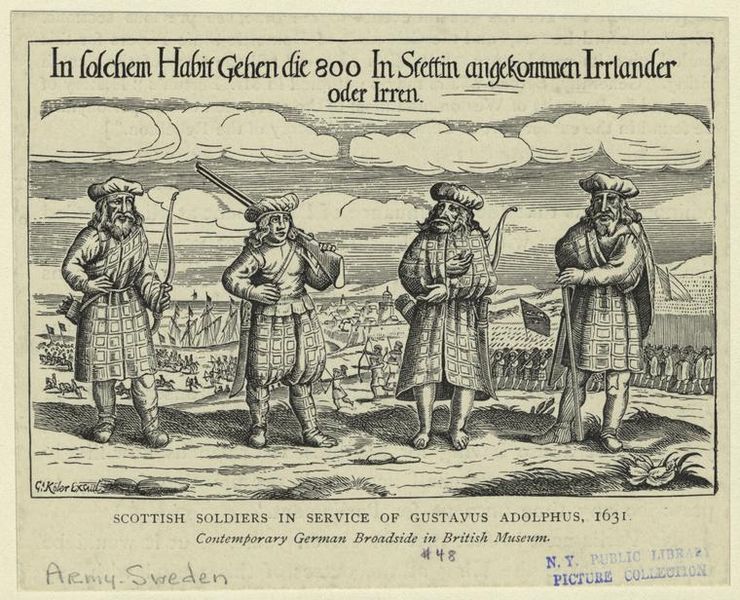
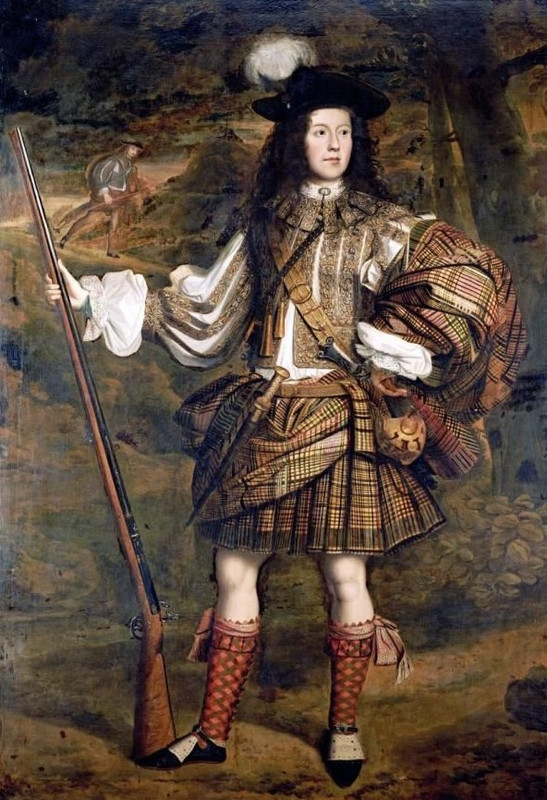
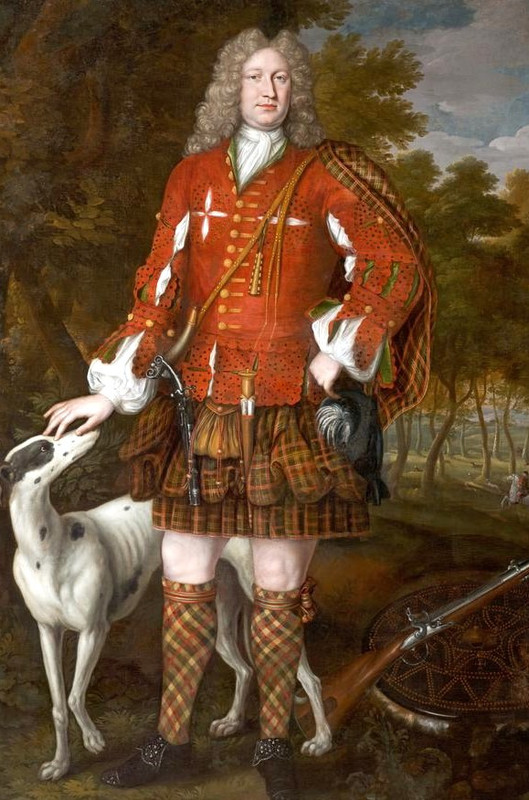
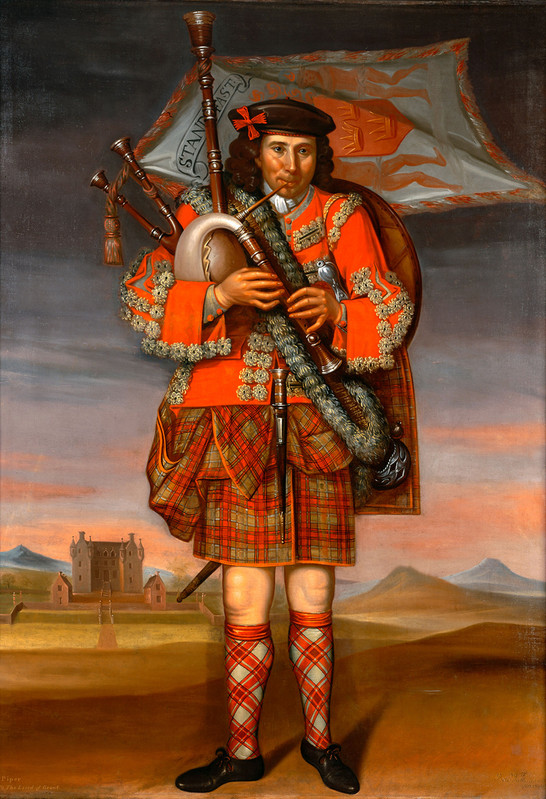
They correspond with contemporary portraits and other images, but they generally agree that the dirk is worn suspended from a belt on one side of the sporran, with a pistol on the other. Observers note this curious placement by saying they appear to guard the delicate parts of the body that every man always protects with vigour.
If worn at the front, the dirk (or pistol) is reached and gripped easily by either hand, for a backhand stab or forehand thrust, or a quick straight shot. Until the general disarming of the population in the 18th century, it was common for men to 'walk abroad' with a sword, and the Highlander's preference was the basket-hilt broadsword which could have a blade three inches wide, and was used more as a cleaver than an epee. The sword was carried across the body on a baldric on the opposite hip to his dominant hand.
When it came to fighting, the highlander's way was to draw the sword with one hand and grasp the dirk with the other, so that an overhand cleaving strike could be followed immediately with a backhand stab, coming either from above and landing on the opponent's shoulder or neck, or lower-down sideways into the soft flanks.
When used in conjunction with a targe (particularly those fitted with a central spike) the armed Highlander was formidable. The targe would take the opponent's strike whilst the broadsword would come down heavy and fast from behind it. The dirk, being held in the same hand as the targe, would would stab at the opponent's sword-arm or any other exposed area after they had made contact with the targe.
There is an account from The '45 of a Government army officer in combat with a targe-weilding Highlander, and calls for him to come out from behind his 'door' and fight like a gentleman.
This type of close-quarters fighting was what made the Highland charge so effective - the fighting style enhanced by impetus. But with discipline, the receiving force could stop it in its track, which is essentially what made Culloden a relatively easy victory for the properly trained Government forces. The Highland charge had no follow-through move - it could only withdraw and charge again if checked as at Culloden, or it was strategic chaos if the reeiving lines broke, as at Falkirk a couple of months earlier.
The Black Watch were initially allowed to fight in their tradtional Highland way, when they became a regiment of the line and saw action on the Continent, striking new fear into the French at Fontenoy in 1745. But, dispite this, the broarsword, targe and other items were abandoned for active service during the collonial troubles later in the century. Odd, because in much of those fighting conditions, sword and dirk had far greater use and effect than firearms.
The carrying of the dirk at the right hip, so that it hangs down the side of the leg, is a regimental style that has been carried over into civilian style, and the current habit is a pared-down version of the heavily and ornamentally armed revivalist style of the 19th century. The dirk is now an ornament rather than a true fighting weapon, and is carried with ease and convenience for the diningroom or ballroom.
The pre-19th century Highland dirk resembles quite closely the eastern European style of stab-and-thrust weapons of the 16th-18th centuries, with the blades being long, wide and tapering evenly to a point along their whole length, and the grip or hilt were similar also. Many of the Highland blades were of German manufacture, and found their way to Scotland with the thriving Baltic trade into eastern ports like Aberdeen, Montrose and Dundee.
Short-bladed fighting weapons remained popular in other quarters, with soldiers using a short cutlass-like hanger, and the navy favouring their style of dirk - neither of which you would want to find yourself on the wrong side of..!
-
The Following 2 Users say 'Aye' to Troglodyte For This Useful Post:
-
2nd June 26, 06:48 AM
#23
Last edited by OC Richard; 2nd June 26 at 07:08 AM.
Proud Mountaineer from the Highlands of West Virginia; son of the Revolution and Civil War; first Europeans on the Guyandotte
-
The Following User Says 'Aye' to OC Richard For This Useful Post:
-
Originally Posted by geomick
does that involve nuns with rulers correcting those sinister individuals? (I'm thinking like the nun in the original "Blues Brothers" movie)
My sweetie, a Campbell (GASP!) is a good Catholic girl who was hit daily by the Carmelite nuns who "taught her" in Elementary school because she is left handed and they were going to beat that demon out of her!
She is still left handed six decades later and the net effect was a lifetime dislike of "school learning" and that I can't get her into a church of any denomination, ever.
I'm right handed but I stuff my Sgain Dubh in my left sock because a health issue a decade and a bit back left my right calf bigger than my left. It's a purely practical matter. Besides, I figure that the shell game will confuse the Sassenach opposite me if it ever comes down to my needing to use it.
I'm not sure if it's even legal for me to carry a Dirk, here.
Last edited by Canadian Vet; Yesterday at 10:55 AM.
Reason: typo
-
-
It may seem odd to we modern people, to wear one’s dagger in the middle of the front of our person, as my friend Richard has shown multiple illustrations of. However there are a few very distinct advantages.
#1 From a tactical standpoint it allows for a pretty easy main hand or off hand draw. [Please note that in close quarters a sword would be too slow and/or too long to draw]
#2 It puts the blade in an extremely difficult place for someone to sneak up on you and grab it.
#3 (and this is very, VERY IMPORTANT!) …
…it is funny!
If we look at the forerunner of the highland dirk, the bollock dagger, it makes even more sense.
Though not directly about Scottish weaponry, I thought this video was quite amusing and its creator spends a lot of time examining ancient weaponry, art, and manuscripts tying to piece together not only what older peoples made, but why, and how they were used.
https://www.youtube.com/watch?v=79qheU3I8uE
Cheers
Jamie
-See it there, a white plume
Over the battle - A diamond in the ash
Of the ultimate combustion-My panache
Edmond Rostand
-
The Following User Says 'Aye' to Panache For This Useful Post:
-
the videos from Tod (Tod's Workshop, Tod Cutler) are very good information for those interested in medieval thru late renaissance eras. I've been buying from them for 4 or 5 years.
-
 Posting Permissions
- You may not post new threads
- You may not post replies
- You may not post attachments
- You may not edit your posts
-
Forum Rules
|
|





 Reply With Quote


Bookmarks